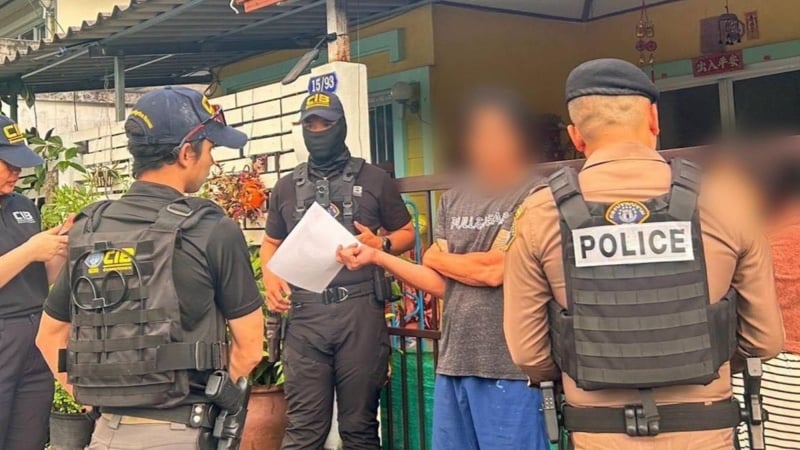
The result was a synchronous operation in 11 provinces of Thailand, during which 30 suspects were detained, writes The…
Views: 10
Published: 21/08/2026 · Occurred: 21/08/2026
Cashing out money in Phuket led CIB to a large network of phone scammers Suspicious cash withdrawal transactions in Phuket allowed the Central Bureau of Investigation (CIB) to reach a large network of phone scammers, through whose bank accounts more than 200 million baht passed. The result was a synchronous operation in 11 provinces of Thailand, during which 30 suspects were detained, writes The Phuket News.
According to the Phuket edition with reference to CIB, the starting point of the investigation was precisely the unusually large cash withdrawal operations in Phuket. Participants in the scheme cashed out tens of millions of baht per day here, after which the funds were transferred further along the chain.
An analysis of the transactions linked the Phuket activity to the case of an elderly woman from Kalasin province, who was persuaded by scammers to transfer more than 12.2 million baht of personal savings to them. Then a connection was established with other episodes of classic telephone fraud.
Police have linked the group to more than 20 other fraud episodes with confirmed damages in excess of 20 million baht. The total turnover of bank accounts related to the network exceeded 200 million baht.
The attackers introduced themselves as police officers and convinced the victims that they were allegedly involved in money laundering cases, and therefore should transfer money to special accounts of law enforcement agencies for verification. Then the funds were predictably stolen.
The investigation believes that the network was managed by a Chinese citizen. The money received from the victims passed through a network of dummy accounts (mules) and multi-stage conversion, including their withdrawal into cash.
"The money is believed to have been withdrawn from accounts in Phuket, after which it was transferred to a digital-to-asset exchange, converted to USDT and placed in digital wallets in Cambodia to conceal its origin," writes The Phuket News, not claiming to be accurate in the wording, but emphasizing the connection with Cambodia. Officers of the Crime Suppression Division (CSD) conducted simultaneous searches at 30 locations in 11 provinces, including Phuket, and detained 30 people on court warrants.
The suspects are charged with participation in an organized criminal group, fraud by impersonating other persons, forgery and use of official documents, introduction of false information into computer systems and money laundering. During the operation, the police seized 30 mobile phones and 15 bank books, and blocked 18 accounts related to the investigation.
However, they had only 7 million baht. According to CIB, almost all detainees admitted during initial interrogations that they received money in their accounts, transferred or withdrew it and kept a pre-agreed share for themselves.
At the same time, the investigation has yet to establish how much each of them understood the fraudulent origin of the funds. Phuket as a hub for fraudulent transactions The current case is far from the first in which the trail of dirty money eventually leads to Phuket.
The island regularly appears in CIB reports on the arrests of mules (dummy account holders) and cashers of criminal proceeds. Among the suspects, citizens of Thailand are most often mentioned, among foreigners - citizens of Russia.
▫️In May, CIB officers arrested a female mule in Phuket for helping to raise money from the sale of non-existent goods on Facebook. By the time of her arrest, court warrants had been issued in her name in three provinces at once.
▫️In April, when 41-year-old Russian citizen Anton Kurchenko was detained. According to the investigation, the man withdrew money from online fraud through ATMs at least 16 times.
Read more about this case here. Thailand's Anti-Cybercrime Ordinance separately criminalizes the provision of bank accounts, e-wallets, and SIM cards to third parties for use in criminal activities.
In addition, defendants in such cases can simultaneously be charged under the Criminal Code and the Law on Computer Crimes. Read more here.
Photo: CIB / The Phuket News
report.in.th services for this topic
When the story touches exchange, housing, visas, or travel — official project pages below (not random chat ads or risky P2P).
- ThbRub — THB/RUB rate
Online THB/RUB rate and analytics.
thbrub.report.in.th
- VPN for Russia
Access Russian services from abroad.
vpn.report.in.th